
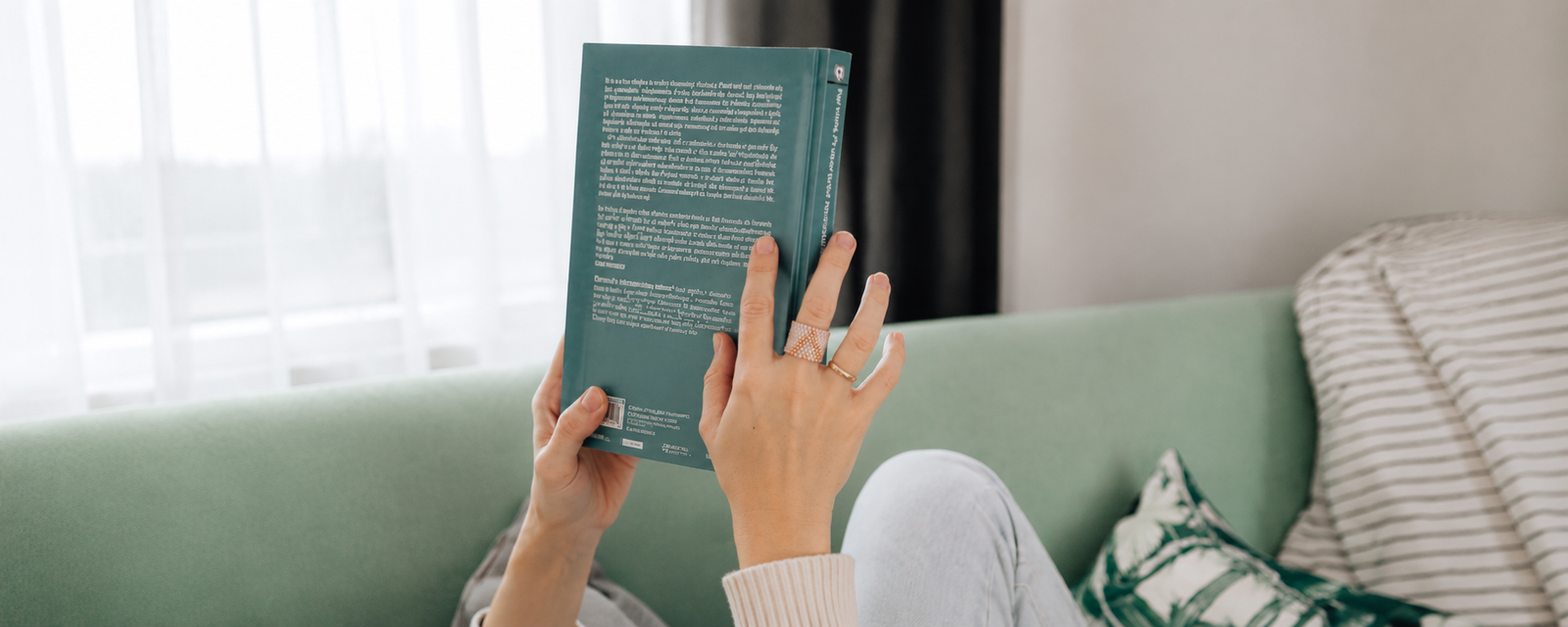
Every book has two authors. The one who wrote the story, and the one who has to sell it in under a hundred and fifty words.
Most writers pour years into the manuscript. Then, exhausted, they type out a limp paragraph explaining what happens. That paragraph is often the reason good books gather dust on shelves while mediocre ones sell out their first print run.
A blurb is the loudest, tightest, most persuasive thing you will write about your own book, and it deserves the same craft as your opening chapter.
Courtesy: The Consulting Writer
Why a Blurb Refuses to Be a Summary
Here’s the uncomfortable truth: nobody has time for your plot.
According to a well known study on visual judgment by Lindgaard, Fernandes, Dudek, and Brown, people form an impression within about fifty milliseconds of looking at something, long before conscious thought kicks in. The blurb itself gets a slightly longer runway—somewhere between three and thirty seconds. A widely cited bookstore observation, reported by both Forbes and Bublish, puts browsing behaviour at around seven to eight seconds for the cover before a reader decides whether to even flip the book over.

Whichever number you trust, the lesson repeats itself. You are not writing for a reader with a highlighter and a free afternoon. You are writing for someone scrolling, someone who has already put down three other books today.
A summary lists events chronologically. A blurb selectively picks up the good bits of the book, and with a dusting of irresistibility, serves it to you on a shiny platter, making your tongue loll for the best bite.
Think of It as an Advertisement
If your blurb read like the back of a cereal box, listing ingredients and nutritional facts, nobody would buy it. Treat your blurb the way a perfume house treats its thirty-second commercial. It never tells you what’s in the bottle. It sells you the version of yourself you’ll become wearing it.

Here’s the same premise, written two ways:
Weak: Meera investigates her sister’s disappearance and uncovers secrets about their family.
Strong: Everyone in Meera’s family swears her sister ran away. Meera has found three reasons to believe they’re lying, and one reason to wish she hadn’t looked.
Same plot. Completely different pull. Your blurb has one job: convince a stranger to hand over their money and their time. The theme, the symbolism, the beautiful sentence on page 214, all of that can wait until they’ve already bought the book.
The Anatomy of a Blurb That Works
Three ingredients show up in almost every blurb that converts browsers into buyers: a punchy hook, high stakes conflict, and a teasing cliffhanger. Here’s what each looks like in a blurb that actually sold millions of copies.
1. A punchy hook
Your opening line has to do more work than any other sentence in the blurb. It should raise a question the reader cannot walk away from.
“Who are you? What have we done to each other?” from the official opening line of Gone Girl by Gillian Flynn
Two questions, ten words, no scene-setting at all. It reads like a voice already collapsing, and it forces the reader to want the rest of the sentence that explains why anyone would ask that about their own spouse.
2. High stakes conflict

Once the hook lands, the reader needs to know what’s at risk and why it matters right now/
“…shoots him five times in the face, and then never speaks another word…” from the official description of The Silent Patient by Alex Michaelides
The violence and the silence arrive in the same breath. The reader immediately knows what happened and immediately wants to know why, and the only way they get to resolve the conflict is by reading the book.
3. A teasing cliffhanger
Do not offer resolution.
“Who among them is the killer and will any of them survive?” from the official description of And Then There Were None by Agatha Christie
The line names the exact question the entire book hangs on, and answers none of it. Ten strangers, one killer, nobody says who.
Skip any one of these three ingredients and the blurb goes flat. A hook without stakes feels gimmicky. Stakes without a cliffhanger feel like you’ve already told the ending.
The Rules Nobody Mentions
Beyond structure, blurbs live inside a few tight constraints that most first-time authors get wrong.
- Length: 100 to 150 words. Long enough to build a world, short enough to read in one breath. If you can’t say it in 150 words, you haven’t found the actual story yet.
- Present tense. Even if your novel is written in past tense, your blurb almost always shouldn’t be. “Meera finds a letter” pulls the reader into the moment. “Meera found a letter” reports on something already finished. Present tense makes the danger feel current.
- Active voice. “The killer stalks the village” has teeth. “The village is stalked by a killer” does not. Active constructions put a person at the centre of every sentence, doing something, deciding something, losing something.
Speak the Language of Your Genre
Fiction and non-fiction blurbs are built from entirely different machinery, and blending the two is one of the fastest ways to lose a reader mid-scroll.
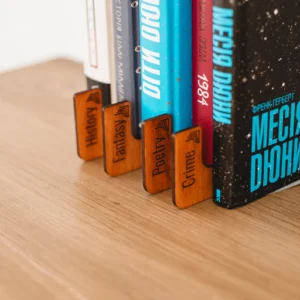
Fiction blurbs run on character and tension. They introduce a person, place them in danger, and stop just short of the resolution. Each genre has its own unspoken contract too:
- Romance promises emotional payoff and often names the central relationship tension directly.
- Thriller and mystery lean on ticking clocks and unreliable information.
- Fantasy establishes the rules of the world quickly, usually through a single evocative image, before introducing the character who will break those rules.
- Literary fiction tends to trade plot mechanics for voice, hinting at theme rather than event.
Know your genre’s contract before you write a single line. Readers of each genre are trained to look for specific signals, and a blurb that ignores them reads as a mismatch even when the writing itself is strong.
Courtesy: Etsy
Non-fiction blurbs work differently. Instead of a hooked character, they open with a problem the reader already has and they promise a transformation. And crucially, they need to establish the author’s credentials, fast and without it sounding like a resume.
James Clear’s Atomic Habits is a useful study in this. The copy surrounding the book consistently frames him as someone whose work is used by elite athletes and Fortune 500 teams, which does the quiet work of telling the reader why this particular voice is worth trusting on the subject of habit change. A memoir needs a different kind of credential. Rather than expertise, it needs lived experience. Know which one your book is selling before you write the opening line.
Let Your Characters Walk Through the Door
A reader should be able to picture your protagonist within a sentence or two, through a defining choice or contradiction rather than physical description.
“A grieving widow” is a category. “A widow who has kept her husband’s side of the bed made every morning for three years” is a person. Give us the one detail that reveals character, and let the reader’s imagination fill in the rest. You are not writing a police report.
Courtesy: Browns Books
Borrow a Line From Inside the Book
Not every hook has to come from the blurb writer’s own sentences. Sometimes the sharpest one already exists inside your manuscript, waiting to be lifted onto the back cover.
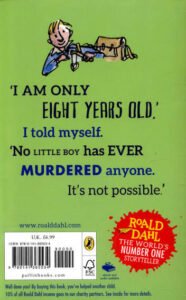
Look for a line your beta readers underlined without being asked to, a piece of dialogue that lands with unusual force, or one striking sentence from deep inside the story. Pull out a single line only, print it above or below your blurb, often set apart in italics on its own line. Readers get a glimpse of your voice before they’ve bought the book, just a glimpse, yet enough to let the reader simmer in curiosity about the story it came from.
Keep it short and let it stand completely alone. If the line needs the paragraph around it to make sense, it’s the wrong line. The right one works out of context and still makes a stranger want the context.
The Art of the Held-Back Detail
This is where second drafts usually go wrong, even after the hook and stakes are sorted. Writers who understand structure still can’t resist explaining too much, as if terrified that the reader won’t understand the book without a map. Resist it.
Tell the reader enough to want the answer. Never enough to have it. If your blurb reveals the twist, names the killer, or explains how the romance resolves, you’ve spent the one currency a blurb has: curiosity.
Before You Hit Publish
Read your blurb out loud, then check it against these:
- Does it sound like a summary you’d give a friend who asked “what’s it about”? If yes, start over.
- Have you named the stakes clearly, and left the ending alone?
- Is every sentence in present tense, active voice, and under 150 words total?
- Does the last line still feel unfinished, on purpose?
- Have you pulled one short, unforgettable line from inside the book itself?
If it passes, you’ve done the harder job. You’ve made a stranger want to stop scrolling and start reading.
Courtesy: imgflip


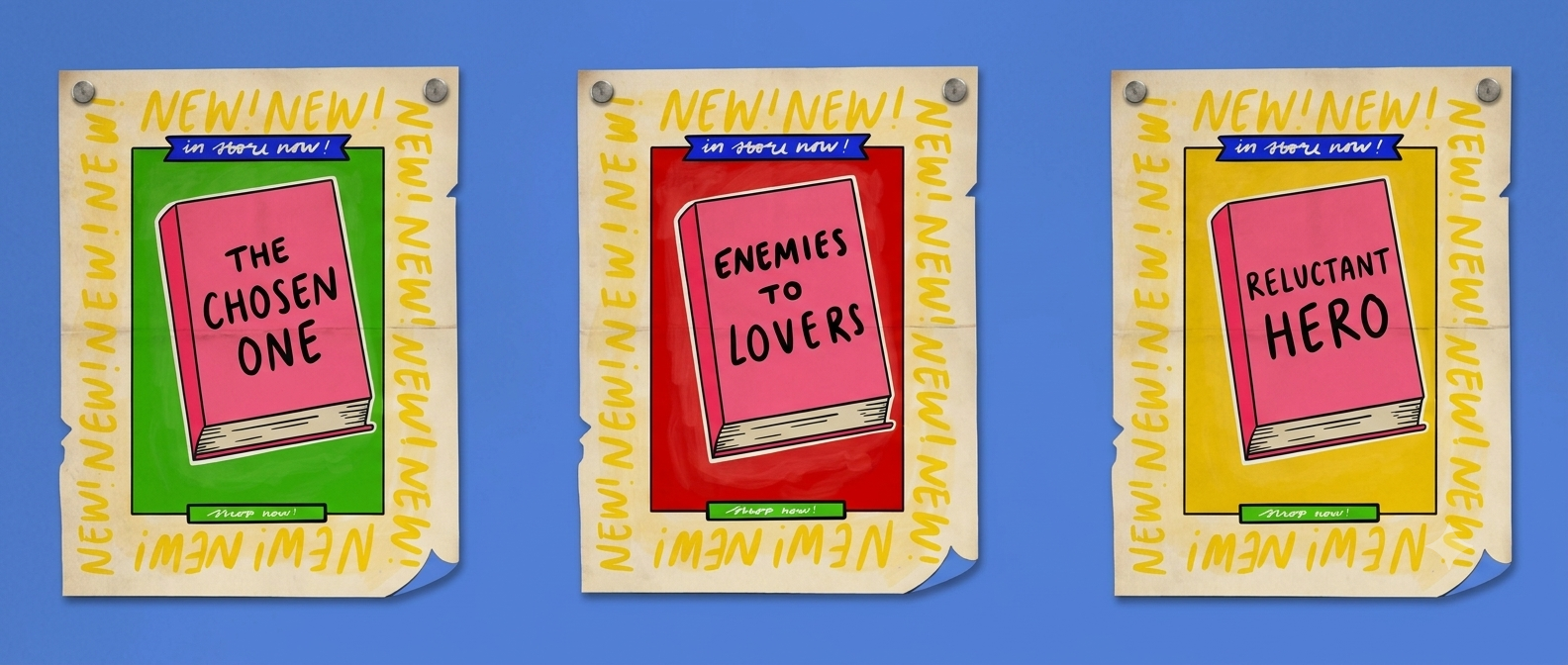

So Blurb it is…I thought it’s just called a summary, never knew it has a completely different name for itself. It is so important to make a blurb interesting in a way that it makes the person want to read the whole story. I loved the example of ‘Gone Girl’ where with just two questions, it brought curiousity in my mind. Even borrowing a line from inside a book is a very fascinating idea. I mean, knowing that this line is somewhere in the book and around this line is the answer to “what is happening”.