
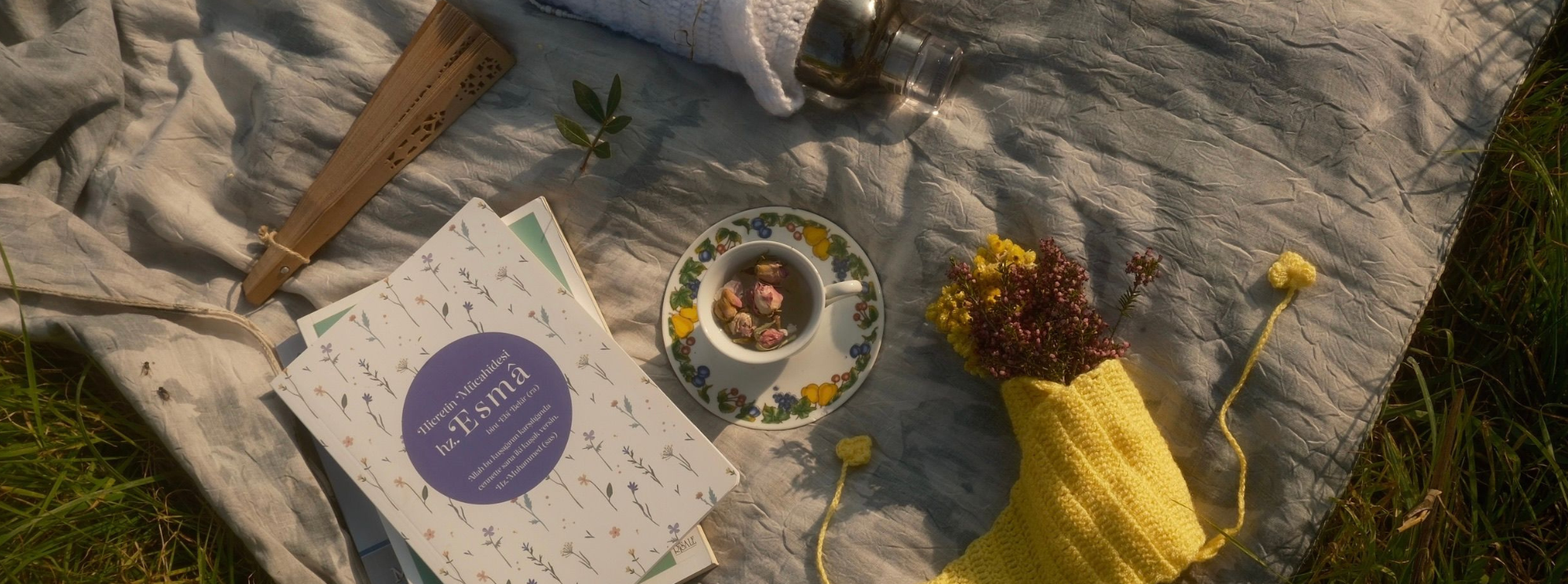
There’s a very specific kind of reading that only works on a Sunday morning. Not the reading you do to finish something, or to impress someone at a dinner party, or because a deadline is breathing down your neck. The reading where the tea’s gone lukewarm because you forgot about it twenty pages ago, the light is doing that soft, buttery thing through the curtains, and nobody expects anything from you until at least noon.
Not every book earns a place in that hour. Thrillers don’t belong there, they want your pulse up. Neither do the very sad, very important novels that leave you staring at the ceiling for an hour after. A slow Sunday morning book is unhurried by design. It ambles. It lets you put it down mid-sentence to make toast and picks up exactly where you left it, no hard feelings.
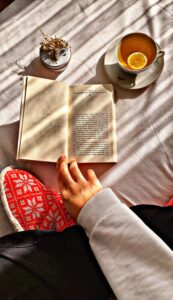
Here are ten of them, gathered from a few different corners of the world and a few different corners of India, all of them built for exactly that kind of morning.
1. Malgudi Days — R.K. Narayan
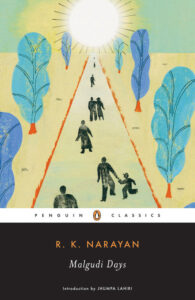
If any book invented the Indian version of a slow Sunday, it’s this one. Narayan’s fictional town of Malgudi runs on its own unhurried clock, and each story wanders through the small, ordinary dramas of the people who live there, a boy who wants a dog, a man who becomes an accidental astrologer, a postman who knows everyone’s business. Nothing here is urgent, and that’s exactly the point. You can read one story before your coffee and another after, and the town will still be waiting for you tomorrow.
2. Kitchen — Banana Yoshimoto

A short novel about grief, and somehow one of the coziest things you’ll ever read. Mikage, grieving her grandmother, finds comfort sleeping next to her friend’s kitchen, and the whole book carries that quiet, domestic ache of finding your footing again through small rituals, cooking, eating, tidying. Yoshimoto writes food the way some people write about falling in love, tender and specific, and the book never once raises its voice.
3. The Elegance of the Hedgehog — Muriel Barbery
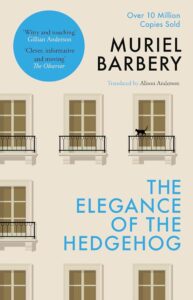
Set inside a Parisian apartment building, this one belongs to a concierge who hides a sharp, private mind behind a deliberately dull exterior, and the twelve-year-old girl in the building who’s decided to end her life on her thirteenth birthday unless something changes her mind. It sounds heavier than it reads. Barbery’s prose moves at the pace of a Sunday stroll through the Luxembourg Gardens, philosophical without being exhausting, and it rewards a reader who’s willing to sit with a paragraph rather than race through it.
4. The Guernsey Literary and Potato Peel Pie Society — Mary Ann Shaffer & Annie Barrows

Written entirely in letters, this one has the particular comfort of eavesdropping on a friendship as it forms. A London writer corresponds with the residents of Guernsey in the aftermath of the Second World War, and what starts as research for an article turns into something far warmer. It’s funny in the way old letters are funny, a little formal, a little gossipy, and it’s the kind of book that makes you want to write actual letters to actual people, on actual paper, this weekend.
5. Chai, Chai — Bishwanath Ghosh
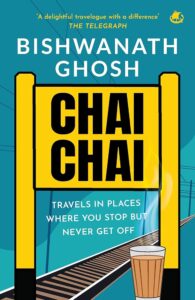
This is the one to read with your own cup going cold beside you. Ghosh travels through India’s forgotten railway junction towns, the ones nobody visits except to change trains, Jhansi, Itarsi, Mughalsarai, and finds an entire, overlooked India waiting in their tea stalls and waiting rooms. It’s travel writing at its most companionable, and it has the strange effect of making you homesick for places you’ve never been.
6. A Month in the Country — J.L. Carr
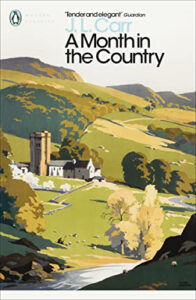
A slim, quietly devastating little novel about an English village, a summer, and a shell-shocked veteran of the First World War who spends a month restoring a medieval mural in a country church. Almost nothing happens in it, in the best possible way. Carr writes English summer light the way some people write about a person they miss, and the whole book fits into an afternoon, though you’ll want to make it last longer than that.
7. Braiding Sweetgrass — Robin Wall Kimmerer
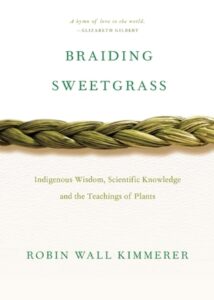
A collection of essays by a botanist and enrolled member of the Citizen Potawatomi Nation, weaving indigenous knowledge together with plant science in a way that makes you look differently at the garden outside your window, or the weeds pushing through the pavement crack near your building. It’s the sort of nonfiction that asks to be read in small pieces, one essay at a time, with long pauses in between to just sit and think about what you’ve read.
8. The Diary of a Bookseller — Shaun Bythell
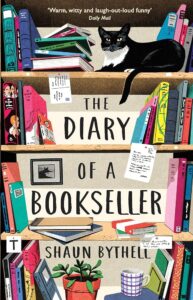
The daily journal of a man who owns Scotland’s largest secondhand bookshop in the small town of Wigtown, and who appears to have very little patience for most of his customers. It’s dry, funny, occasionally grumpy, and completely addictive if you’ve ever worked in retail, publishing, or any job that involves being nice to strangers for a living. Each entry closes with the day’s takings and the number of customers through the door, a small, satisfying ritual that makes you want to keep a similar tally of your own ordinary days.
9. Rain in the Mountains — Ruskin Bond
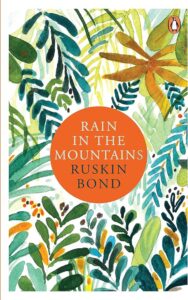
Bond has built an entire career out of writing the literary equivalent of a slow Sunday, and this collection of essays from his years in the Himalayan foothills might be the purest distillation of it. Leeches, langurs, mist rolling over Mussoorie, an old tree he’s grown fond of, a walk he’s taken a hundred times before. Nothing here asks anything of you except to slow down at his pace, which, after a busy week, might be exactly what you need.
10. The No. 1 Ladies’ Detective Agency — Alexander McCall Smith
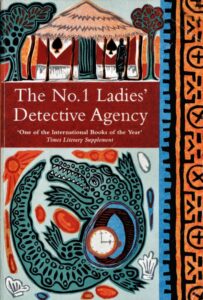
Precious Ramotswe opens Botswana’s first detective agency for ladies, and solves her cases less through car chases and more through patience, common sense, and a deep understanding of human nature. The mysteries themselves are gentle, almost incidental, the real pleasure is sitting with Mma Ramotswe under the acacia trees as she works things out slowly, over many cups of bush tea. It’s one of the few detective series where the crime matters less than the company.
A morning, not a marathon
None of these books ask you to finish them in one sitting, and none of them will make you feel guilty for putting them down halfway through a chapter to answer the door or refill your cup. That’s really the whole test for a Sunday morning book. Does it let you leave, and does it welcome you back without complaint?
If you’re building your own slow morning shelf, it’s worth picking at least one from somewhere you’ve never travelled and one from somewhere close to home. Malgudi and Mussoorie sit easily next to Guernsey and Gaborone on the same nightstand, and that’s rather the point of a good reading life. The world gets a little smaller and a little warmer, one unhurried chapter at a time.

Book cover images courtesy of Goodreads.




Maybe the best way you can fall in love with books or make it a habit to read them is to feel the comfort while doing so. Reading a book on a slow Sunday morning (if you manage to wake up) could be a really great start to gift yourself a habit of reading and a fresh start to a new week. Now if someone asks me, yes I do have plans for Sunday and that is…to get started with a new book in my hand.
In today’s blog, I loved the finding of a new book ‘The Guernsey Literary And Potato Peel Pie Society’ that has been written in such a unique format (in letters).
Its amazing how a book can change the whole perspective of a person
Loved the aesthetic and the recommendations. ✨
Reading chai chai by biswanth gosh with my bhujia
What a beautifully curated list. The way each book was described makes me want to pick one up, brew some tea, and disappear for a few hours.