
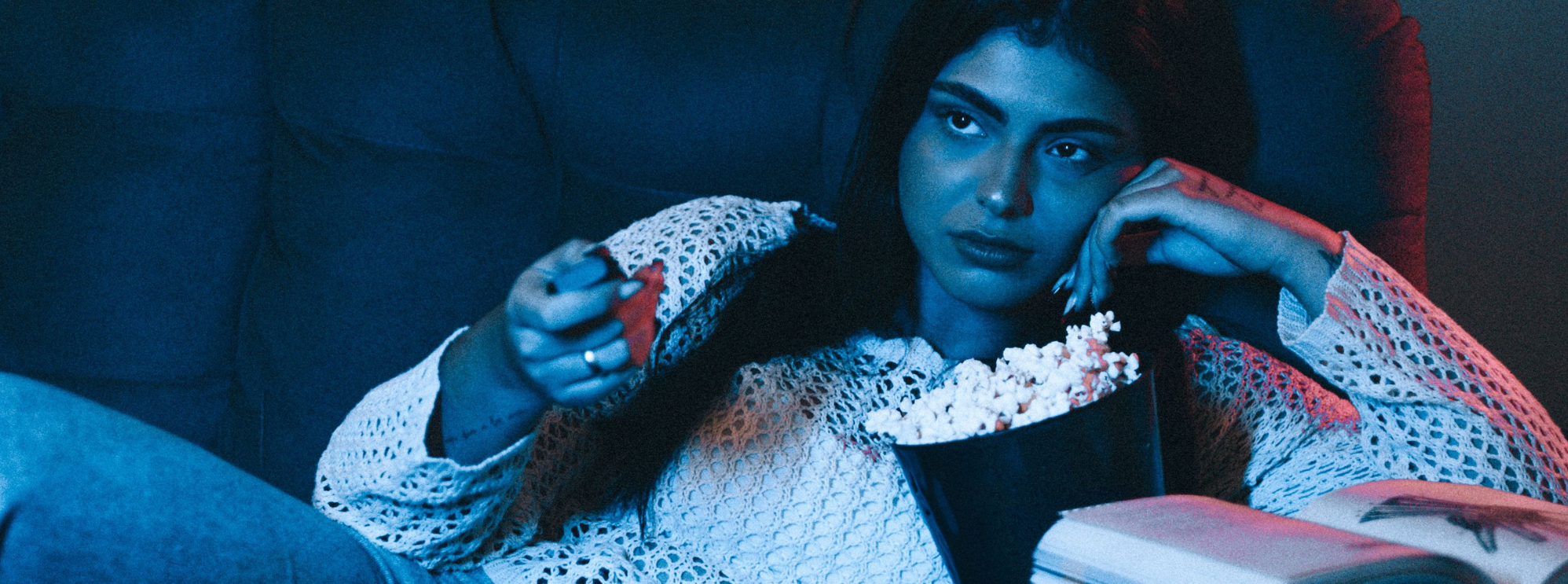
You know that feeling right after the credits roll, when a movie has wrecked you, delighted you, or just refused to leave your head, and you’re not quite ready to let it go? That’s exactly the feeling a good book can extend. The right novel distracts you from the heartbreak of a story ending, and it hands you a whole new world built out of the same emotional DNA, so you never really have to leave.
Think about it: every genre of film has a literary cousin doing the exact same emotional work, just slower, quieter, and usually with better internal monologue. A horror movie leaves you with your heart racing; the right horror novel keeps that heart rate up for another three hundred pages. A love story makes you ache for two hours; the right book makes you ache for a week, in the best way.
So here’s the game: think of the last movie you watched. Chances are, it’s somewhere on this list. And if it is, we’ve got exactly the book you should be reading next.
-
If you watched Main Vaapas Aaunga, read The Stationery Shop by Marjan Kamali
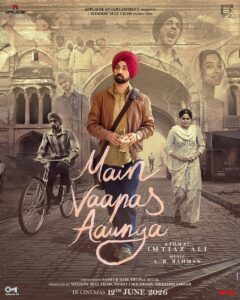
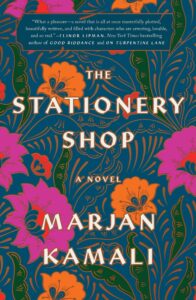
Imtiaz Ali’s latest is a love story stretched thin across decades and memory, a Partition-era romance filtered through the fog of a grandfather’s failing recollection. It’s tender, it’s devastating, and it understands that some love stories don’t end, they just get interrupted by history. Marjan Kamali’s The Stationery Shop lives in that exact same register: two lovers separated by political upheaval in 1953 Tehran, reunited decades later with all the things they never got to say still sitting between them. If Main Vaapas Aaunga left you sitting in the dark a little longer than usual, this book will finish the conversation the film started.
-
If you watched Evil Dead Burn, read A Head Full of Ghosts by Paul Tremblay

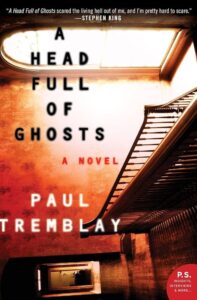
Evil Dead Burn understands that the scariest monster isn’t a demon, it’s watching the people you love turn into strangers, one by one, inside the house you thought was safe. Paul Tremblay’s A Head Full of Ghosts runs on that exact dread: a Massachusetts family slowly convinces themselves their teenage daughter is possessed, and the story never quite tells you whether to believe them, or whether grief and mental illness are just easier to survive if you call them something else. It’s less interested in jump scares than in the horror of watching a family unravel in real time, and trusting each other less with every passing day. If Evil Dead Burn had you white-knuckling the armrest as one relative after another turned, this book will make you question whether the demon was ever really the point.
-
If you watched Moana, read The Girl Who Fell Beneath the Sea by Axie Oh
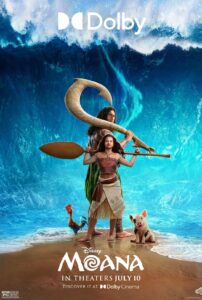
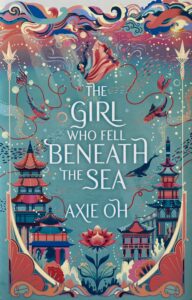
If you caught the new live-action Moana in theatres this week, you’re basically part of a very fresh fandom, the film only just sailed in on July 10. Whichever version brought you here, there’s a very particular kind of magic in a girl answering the call of the ocean, and doing it not because she’s fearless, but because she refuses to be anything less than herself. Axie Oh’s The Girl Who Fell Beneath the Sea trades Moana’s Pacific mythology for Korean folklore, following a girl sacrificed to the Sea God who discovers a hidden underwater kingdom and a strength she didn’t know to look for. Same emotional current, different water.
-
If you watched Obsession, read A Touch of Jen by Beth Morgan
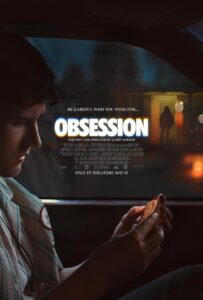
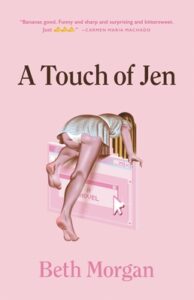
Obsession as a genre understands something most love stories won’t admit: wanting someone can curdle into something unrecognizable if you let it go far enough. Beth Morgan’s A Touch of Jen starts as a story about a couple’s shared fixation on a woman from Instagram and spirals into something so unhinged and darkly funny that you’ll laugh right up until the moment you’re genuinely disturbed. If the movie left you a little unsettled by how far desire can stretch, this book will happily push you the rest of the way.
-
If you watched Backrooms, read House of Leaves by Mark Z. Danielewski
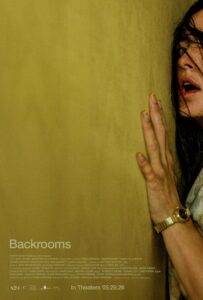
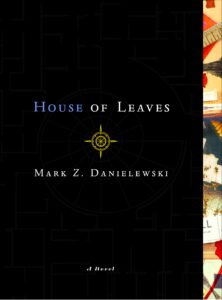
Backrooms taps into a very specific, very modern kind of dread, the internet-born horror of endless, liminal, familiar-yet-wrong spaces that shouldn’t exist but somehow do. House of Leaves got there first, and arguably did it better, decades before “liminal space” was a term anyone used. A house that’s bigger on the inside than the outside, a manuscript that unravels the sanity of everyone who reads it, footnotes that spiral into their own nightmare. It’s less a book you read than a literal maze you get lost in, exactly like the movie, just with more paper cuts.
-
If you watched The Devil Wears Prada 2, read When Life Gives You Lululemons by Lauren Weisberger
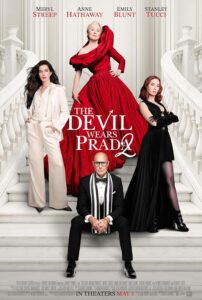
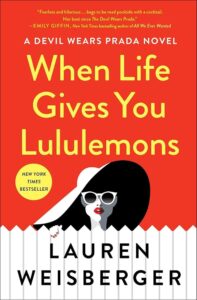
Ambition wrapped in glamour, and the cost of building an image so perfect it eventually starts building you. Here’s the twist: Lauren Weisberger, the same author who wrote The Devil Wears Prada, picks up years later with Emily Charlton, Miranda’s former assistant, now reinventing herself as an image consultant to the rich and reputation-damaged. When Life Gives You Lululemons follows Emily into the socially cutthroat world of Greenwich, Connecticut, proving that the claws don’t retract just because you’ve left the magazine. If you’ve ever wondered what happened to the girl who survived Miranda Priestly and came out the other side, this is her story, and Miranda herself even makes an appearance.
-
If you watched Dhurandar, read Escape to Nowhere by Amar Bhushan
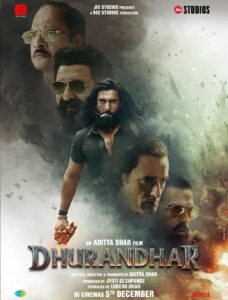
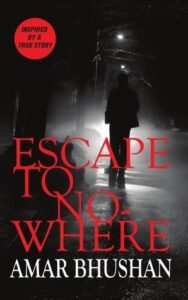
Revenge thrillers live or die on how real the stakes feel, and nothing makes fictional espionage feel realer than a book written by someone who actually lived it. Amar Bhushan spent decades inside India’s external intelligence agency before turning to fiction, and Escape to Nowhere isn’t just inspired by that world, it’s a thinly veiled retelling of one of Indian intelligence’s most humiliating real failures: the 2004 defection of Rabinder Singh, a senior R&AW officer who was under active surveillance for spying for the CIA and still managed to slip out of the country. The book trades gunfights for something scarier: bureaucratic hesitation, internal rivalry, and the sinking realization that the mole is going to get away, not because no one saw it coming, but because no one moved fast enough.
-
If you watched The Drama, read Cleopatra and Frankenstein by Coco Mellors
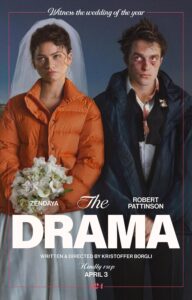
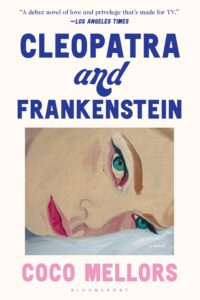
Not every love story is meant to be comforting, and some are more interesting precisely because they refuse to be. Coco Mellors’s Cleopatra and Frankenstein follows a whirlwind marriage between two people who are wrong for each other in ways that take the entire book to fully unravel, addiction, ego, and the particular chaos of loving someone you don’t actually know yet. If the film left you feeling more unsettled than swoony, this book was written for exactly that mood.
-
If you watched Project Hail Mary, read Meru by S.B. Divya
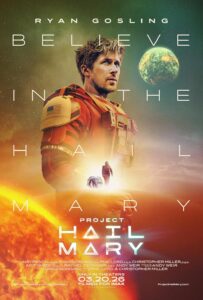
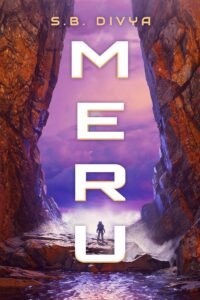
Big cosmic stakes, a lone protagonist carrying the weight of an entire species, and just enough hard science to make the impossible feel plausible, Project Hail Mary earns its charm through actual scientific rigor, not just spectacle. S.B. Divya’s Meru operates in that same serious, ideas-forward register, then goes somewhere Project Hail Mary never quite dares to: the emotional core of the book is a slow-burning romance between Jayanthi, a human woman living with a genetic condition in a future where her body isn’t considered fit for the stars, and Vaha, a genetically engineered post-human who exists as a sentient spacecraft. It’s a love story that asks what happens when you fall for someone who isn’t quite human anymore, wrapped inside a genuinely rigorous vision of what comes after us. If you left the theater thinking about physics and feelings in equal measure, Meru will keep that exact balance going, then push it somewhere stranger.
-
If you watched Cocktail 2, read Every Summer After by Carley Fortune
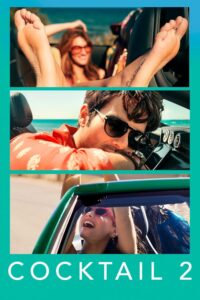
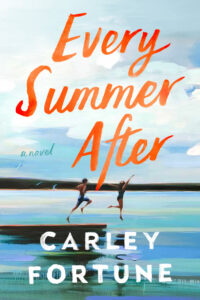
Some stories are built entirely out of golden-hour nostalgia, that specific ache of a summer that changes everything and a friendship that quietly becomes something else. Carley Fortune’s Every Summer After follows two childhood friends whose relationship unfolds across years of summers, missed chances, and the kind of longing that only makes sense in hindsight. If Cocktail 2 had you craving warmth, wistfulness, and a love story with real history behind it, this is your next read.
At the end of the day, movies and books have always been in conversation with each other, one shows you a world, the other lets you live in it a little longer. So next time the curtains fall and you’re not ready to move on, don’t. Just pick up the right book instead, and stay a little longer in the feeling that movie gave you.
Image Credits: Movie stills/posters courtesy of IMDb. Book cover images courtesy of Goodreads.



“Some love stories don’t end, they just get interrupted by history” is gotta be the quote of the day.
Omg this blog was so interesting to read. It did not fall in the previous categories which educated and informed you, but in the ones which makes you read it with your whole heart and a feeling of excitement. Excitement for the very concept of merging two different forms of art and storytelling, acting like puzzle pieces that when joint, will complete your puzzle of emotions.
Thank you for reminding that these two art forms don’t need competition against each other, but a smart mind to utilise them in a way that it acts as one. I really really loved the concept and I feel I am gonna go for A Head Full Of Ghosts By Paul Tremblay.
Reading Every Summer After
Wow this was such an amazing blog, the recommendations were on point and as a person who loves reading books this is so helpful.💓
I dont watch movies that much now i feel like i need to watch them so that i can read the suggested books